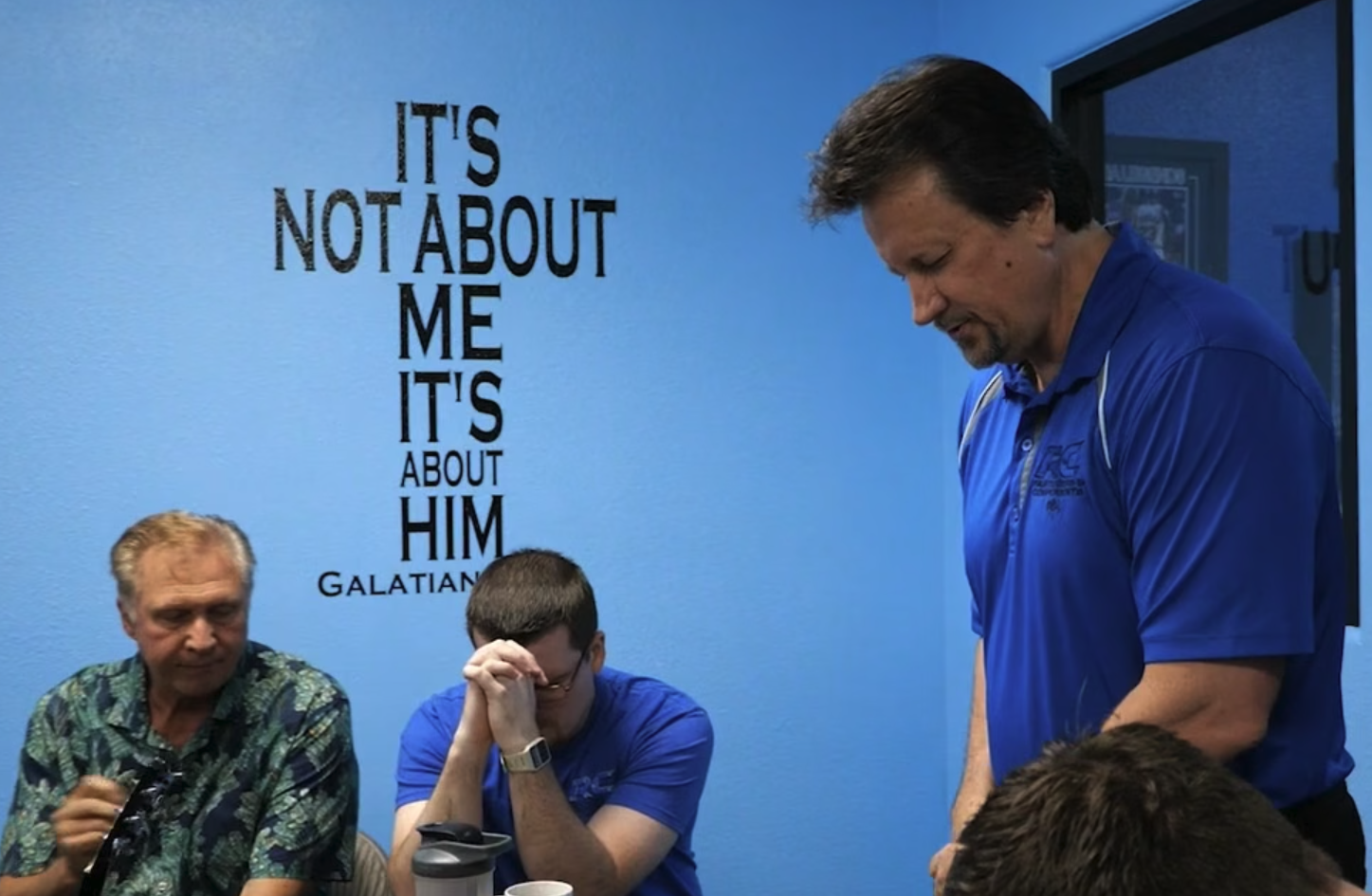
Listen to the way people talk at work, and you'll notice one small word slipping in again and again. My accounts, my team, my project, my numbers. It comes out so naturally that we never stop to question it. We build whole careers on the quiet assumption that what we've made is ours.
Then a last day comes. Someone retires, or moves on, and cleans out a desk that held years of work. By Monday the nameplate has a new name and the accounts are reassigned. The thing you called yours keeps running without you, and it turns out it was never yours to keep.
That stings. It's also, quietly, good news. Because Scripture has a different word for what we do all day, and it isn't owner. It's steward.
The instinct to own runs deep. We measure ourselves by what we've accumulated and what we control, and ownership starts to feel like both security and identity. Lose the title or the account, and it can feel like losing a piece of yourself.
But the Bible opens with God making everything and never once signing the deed over to us. The world and everything in it stayed His.
"The earth is the LORD's and the fullness thereof, the world and those who dwell therein." — Psalm 24:1 (ESV)
That includes your industry and your company. The desk you sit at and the paycheck it earns you. None of it slipped out of God's hands and into yours. You are working inside something that already belongs to Him.
Push the question back far enough and the illusion of ownership falls apart entirely. The skills you bill for, you were given. So was the mind that solves the problem and the health that gets you to the desk each morning. You generated none of it from scratch.
When King David gathered an enormous offering to build the temple, he refused to take credit for the generosity. He knew where it all came from.
"But who am I, and what is my people, that we should be able thus to offer willingly? For all things come from you, and of your own have we given you." — 1 Chronicles 29:14 (ESV)
Paul asks the same thing more bluntly, and it lands on every résumé ever written.
"What do you have that you did not receive? If then you received it, why do you boast as if you did not receive it?" — 1 Corinthians 4:7 (ESV)
Everything you bring to work on Monday arrived as a gift. Your effort still counts for something; the credit for it simply belongs higher up than you.
A steward is not a hired hand and not an owner. He runs the household. He makes real decisions, holds real authority, carries real weight. But he answers to the one who actually owns the place, and he manages everything with that owner's aims in mind.
That's the job description Scripture keeps handing to us at work.
"As each has received a gift, use it to serve one another, as good stewards of God's varied grace." — 1 Peter 4:10 (ESV)
Notice what a steward is measured by. Not how much he piled up, but whether he was faithful with what he was trusted to manage. Jesus told a whole story about it, and the verdict at the end is the line every working Christian is quietly hoping to hear.
"Well done, good and faithful servant. You have been faithful over a little; I will set you over much. Enter into the joy of your master." — Matthew 25:21 (ESV)
Even the reward keeps the same shape. A faithful steward is handed more responsibility and welcomed into the joy of the One he was working for all along, never a deed of his own.
Ownership is finally a question of allegiance. If your work is really yours, then you're the one it's all for, and every decision runs through your comfort and your bottom line. If your work is God's and you're only stewarding it, the center of gravity moves. Jesus said you can't split the difference.
"No one can serve two masters, for either he will hate the one and love the other, or he will be devoted to the one and despise the other. You cannot serve God and money." — Matthew 6:24 (ESV)
The point of that verse is allegiance. You will bow to one master or the other, and a steward has already settled which. He can handle the owner's money all day long without ever bowing to it, because he knows whose it is and whom he serves.
Here is where stewardship stops being theology and starts changing your Monday. When the work isn't ultimately yours, your grip loosens, and almost everything gets lighter.
The anxiety eases first. You can work as hard as ever without the crushing sense that you alone have to secure the outcome, because the outcomes were never yours to guarantee.
Entitlement fades too. It's hard to feel owed when you remember that none of it started with you.
And you begin to see people differently. Your coworkers and your customers are not resources to be spent on your goals. They are part of what God has entrusted to your care, and stewarding them well matters more to Him than any number you hit.
"So, whether you eat or drink, or whatever you do, do all to the glory of God." — 1 Corinthians 10:31 (ESV)
Whatever you do. The spreadsheet, the sales call, the hard conversation, the cleanup nobody noticed. Done for the Owner, all of it counts.
Living this out is less about a program and more about a hundred small reorientations. A few places to start:
The desk gets cleaned out for all of us eventually. Nothing we ever called "mine" makes the trip. What lasts is a different question altogether: were we faithful with what we were lent?
There is real freedom in that. You were never actually carrying the weight of ownership. You were only ever asked to be trustworthy with Someone else's good gifts, in the corner of His world where He placed you.
The title on the door will change. The verdict that outlasts it is the one worth working for. Well done, good and faithful servant.